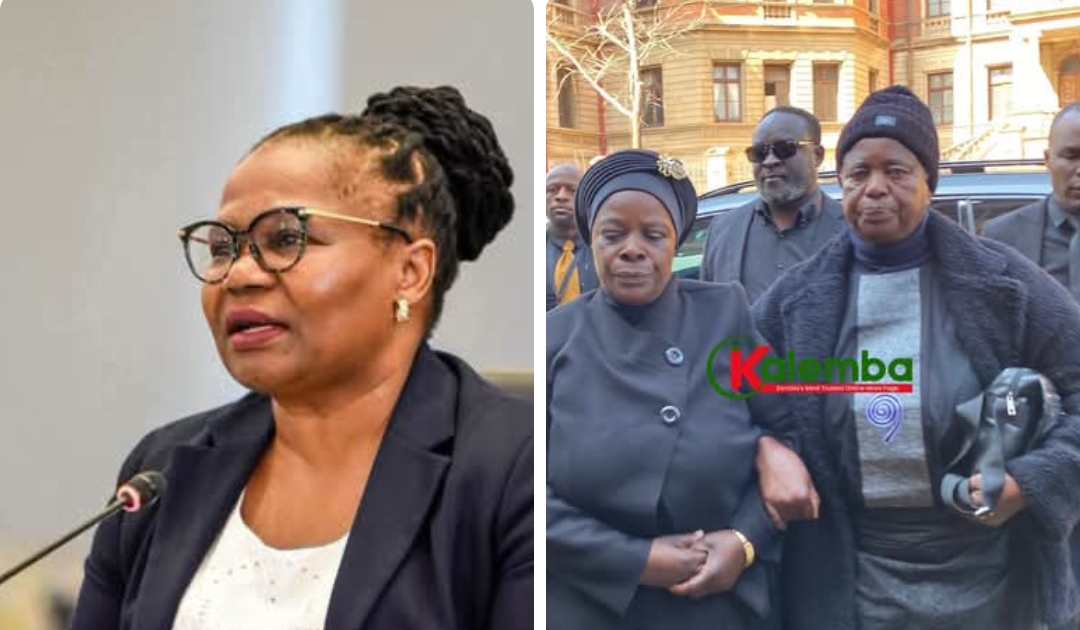
LADY Justice Thandi Norman of the Supreme Court of Appeal (SCA) in Bloemfontein says she would have dismissed the appeal by the family of former president Edgar Lungu had she commanded the majority in a case that has divided the court over his burial arrangements.
Justice Norman made the remarks in a dissenting judgment after the majority of the SCA ruled in favour of the Lungu family and cancelled the Pretoria High Court decision that had allowed the Zambian government to repatriate the former president’s remains for a state funeral in Zambia.
Justice Norman found that a binding agreement had in fact been reached and that the government had acted on it by making extensive funeral and logistical preparations.
She argued that the family could not withdraw from that agreement by relying on constitutional rights, stressing that public policy favours enforcing voluntarily concluded contracts.
“The public policy imperative to enforce contractual obligations that have been voluntarily undertaken recognises the autonomy of the contracting parties and, in so doing, gives effect to the central constitutional values of freedom and dignity,” she said.
The lady justice further stated that there were no grounds to interfere with the High Court decision.
“For all the above reasons, I find that there are no grounds to interfere with the decision of the High Court. It follows that the appeal must fail. Had I commanded the majority, I would have dismissed the appeal,” she said.
However, in its majority decision, the SCA held that the family of the late former president has the legal right to decide on his burial arrangements.
The court found that the government had failed to establish a lawful basis under either South African or Zambian law to override that decision.
Lungu died on 5 June last year in South Africa and triggered a prolonged legal dispute between his family and government over whether he should be buried in Zambia with full state honours or privately in South Africa.
The government, through its counsel Ben Stoop SC, argued that Lungu’s burial was a matter of national interest and state protocol, saying repatriation for a state funeral was justified and outweighed the family’s objections.
However, the Lungu family, represented by Tembeka Ngcukaitobi SC, opposed the application, stating that the former president had expressed a wish for a private burial in South Africa and did not want government involvement in his funeral arrangements.
Writing for the majority, Justice Raylene Keightley held that constitutional principles of dignity, privacy and family autonomy supported the family’s position.
The court also rejected government’s argument that a binding agreement had been reached, finding instead that discussions between the parties amounted to negotiations and not a concluded contract.
“The Zambian government’s failure to establish a right under either common law or contract to override the family’s burial decision is fatal to its case,” the court held.
By Catherine Pule
Kalemba, June 23, 2026