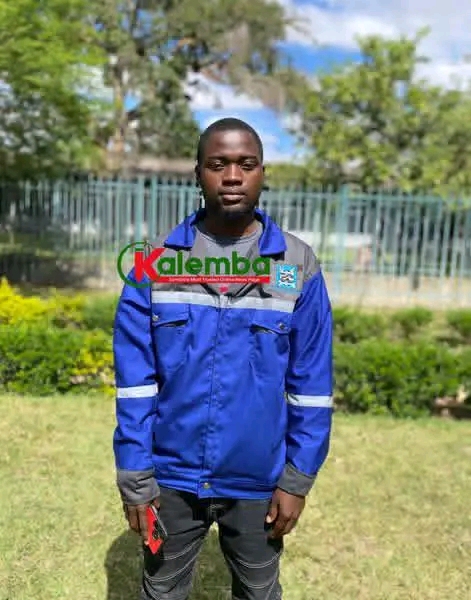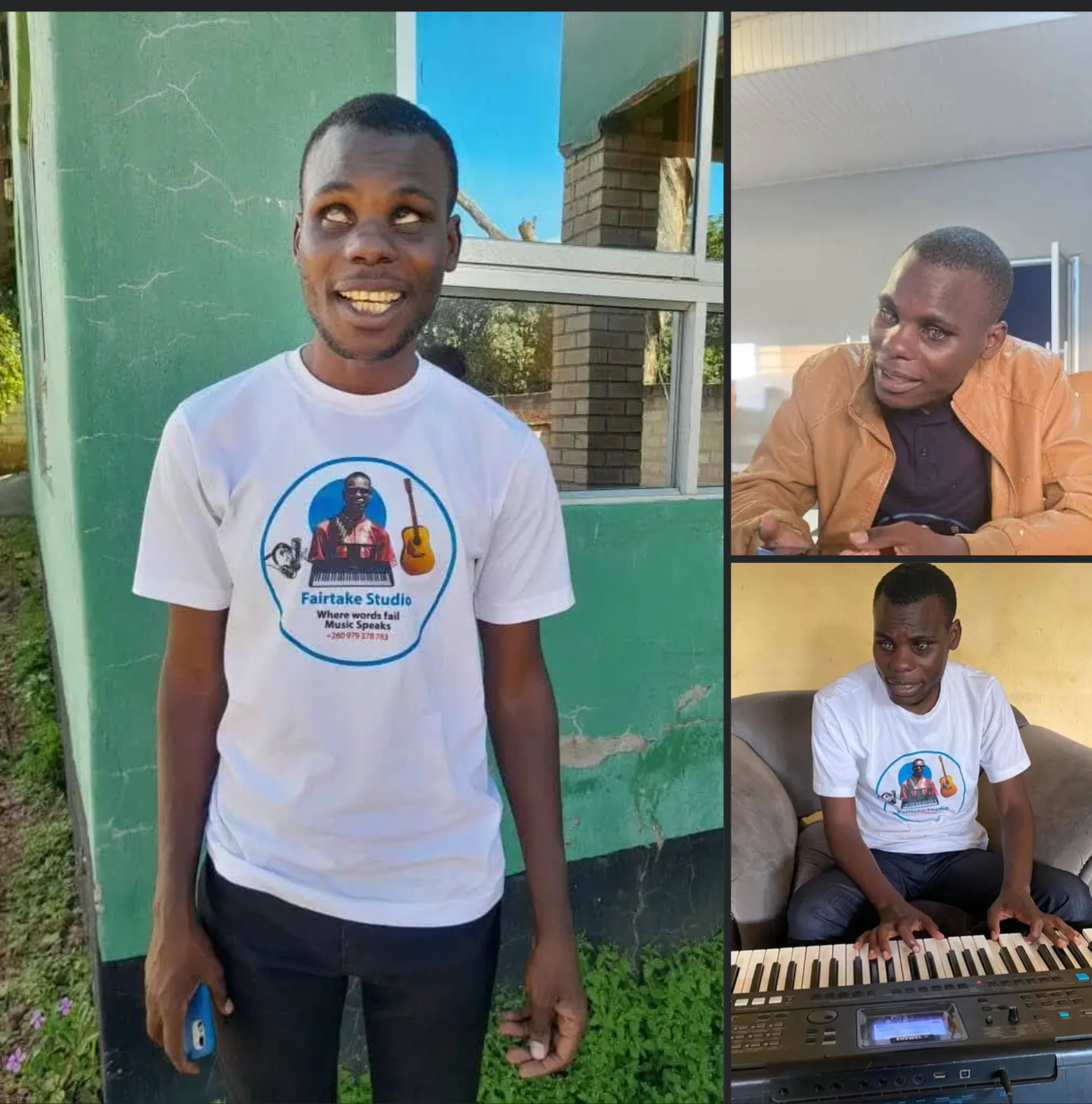
FOUR months after he was born at Chikankata Mission Hospital, Lazarus Hakalebula’s parents were told their son could not see.
The diagnosis fractured the family in Nanzele Village of Chikankata District as his father struggled to accept it and later left.
While his father walked away, his mother chose to stay carrying the burden of raising a child who could not see in a society that often equates disability with hopelessness.
“Shortly after my birth, around four months later, my parents discovered I was blind. This was a very difficult time, as my father struggled to accept it. In fact, it led to my parents’ divorce, and I grew up primarily with my mother,” Hakaleebula told Kalemba.
For years, young Lazarus did not even understand what blindness meant. He did not know what sight was, nor what he was missing until school exposed the painful truth.
“That’s when I truly understood I couldn’t see what my peers could. I couldn’t read or write. That was when I realized I was blind, and it was really hard to accept,” he said.
By then, his younger brother, five years younger, was already in Grade Two.
Hakalebula was 13 when he entered Grade One.
The delay was not by choice, but by circumstance. There were no nearby schools equipped to teach blind learners in Chikankata at the time.
Determined that her son would not be left behind, his mother searched relentlessly until she secured him a place at St. Mulumba Special School in Choma miles away from home.
At the school, teachers noticed his ear for music. He memorised hymns after church services, played traditional drums and improvised homemade instruments.
“Music has always been an inborn talent for me. My mother and grandparents noticed that after church, I would recite the songs we sang. As I grew older, I started playing traditional drums and even made homemade banjos,” he said.
With mentorship from teachers, he learned to play the keyboard and guitar, later composing his own songs.
His breakthrough came in 2002 when he won a Ngoma Award in Lusaka, earning national exposure and performances on the Zambia National Broadcasting Corporation (ZNBC).
“Two years later, I returned to perform at the Ngoma Awards with my school friends. We performed one of my compositions, ‘Zikomo,’ which received massive airplay, especially on ZNBC TV,” he said.
He later attended Rusangu Secondary School in Monze, where he served as a lead pianist in church while continuing his music career.
In 2014, former President Michael Sata recognised him as the best artist among persons with disabilities.
But Hakaleebula’s work extended beyond music.
In 2020, he joined the Zambia National Federation of the Blind as Southern Province focal point person, a role he held until 2023.
At the federation’s quadrennial meeting in Ndola in 2023, he contested and was elected vice president..
Hakaleebula said his decision to seek office was shaped by years of observing how persons with disabilities were sidelined in institutions meant to represent them.
“Historically, persons with disabilities have been silenced, used as rubber stamps, as ladders for others, as tools of charity. I’ve seen how people profit from our vulnerability,” he said.
He added that leadership, for him, is anchored in faith and accountability.
“As the Bible says in Micah 6:8, we are called to act justly, love mercy and walk humbly with God. That belief pushes me to seek leadership that brings checks, balances and inclusion,” he said.
Now serving as vice president of the federation, Hakalebula continues his work as a gospel musician, studio owner and disability rights advocate.
He has composed songs in multiple languages, including Utandiindi Ambali, Luyopila Insansa and Mudokodoko, alongside social commentary pieces promoting unity and peace.
Hakalebula is currently working on a new song titled Balabeleka, dedicated to the President a message of hope from a man once rejected for simply being blind.
From abandonment to advocacy, from darkness to leadership, Lazarus Hakaleebula’s journey stands as living proof that disability is not inability and that rejection can still give birth to destiny.
By Haggai Hamunyemba
Kalemba February 24, 2026