AN 18-YEAR-OLD school leaver from Chipata’s Moth Township of Eastern Province has developed and designed a machine and software that could change how small scale farmers decide what to plant and help them avoid devastating losses caused by guesswork farming.
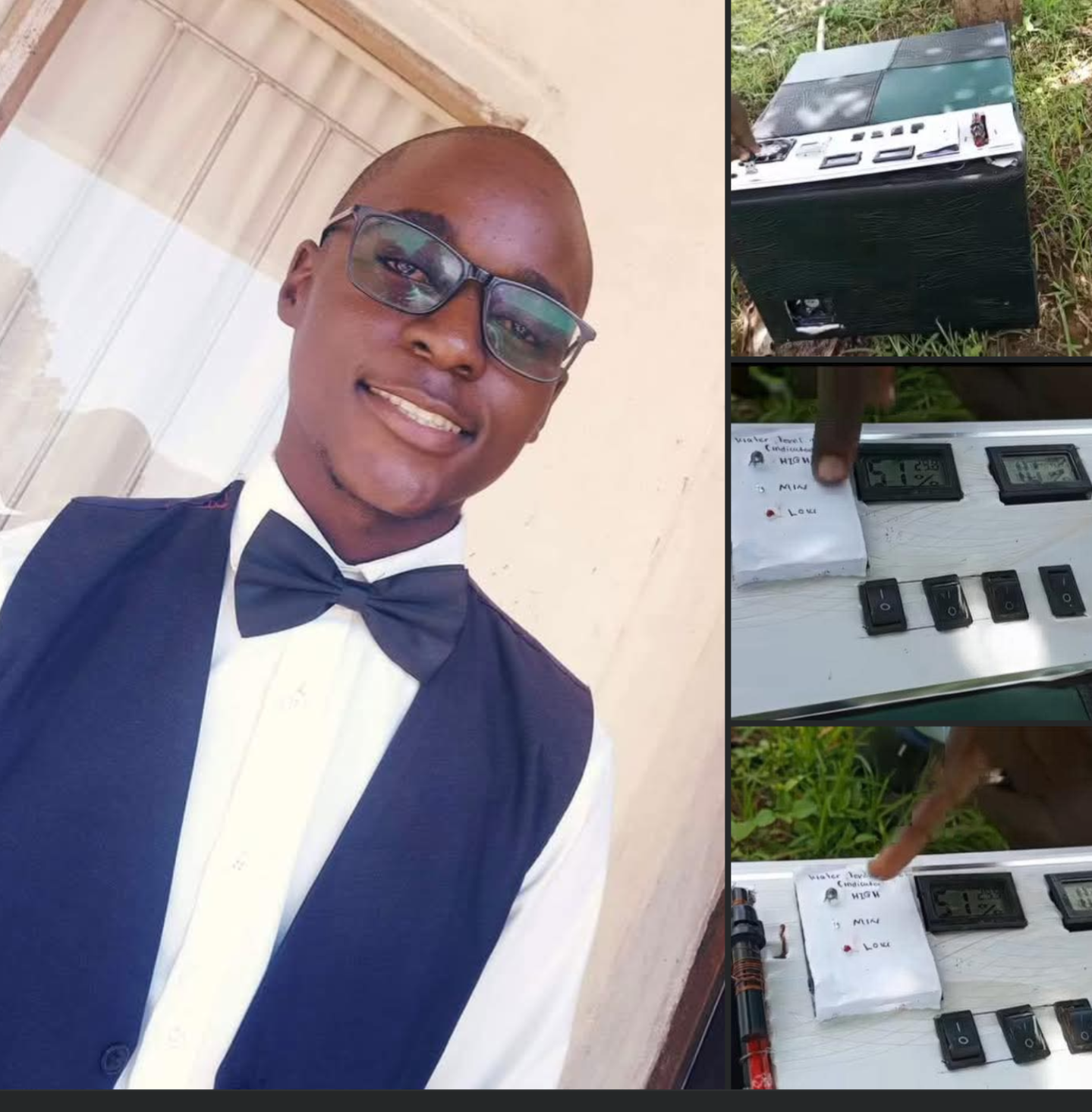
Joshua Maunda, who recently completed his Grade 12 at Anoya Secondary School, told Kalemba that the soil testing device analyses soil conditions and instantly tells farmers which crops are most likely to thrive in their field.
He said the innovation was born out of growing up in a farming community where many families depend on small scale agriculture but often suffer poor harvests due to wrong crop choices and changing climate conditions.
“I grew up in Moth Township, where you see how hard people work in their fields and how painful it is when crops fail,” Maunda said. “That environment made me very aware of the real problems farmers face, especially losses caused by soil-related issues.”
Maunda explained that his interest in innovation began in secondary school, driven by curiosity and a love for problem solving.
He said his late exposure to technology through his father, a technician who once worked for Zamtel, also played a role in shaping his interest in building practical solutions.
“Most farmers plant based on tradition or what worked in the past,” he said. “But soil changes. When the wrong crop is planted, yields are low, money is lost and sometimes farmers even give up for that season.”
The young innovator said the idea to build a soil testing machine came when he realised that existing soil testing methods were expensive and inaccessible to small scale farmers.
Using self taught skills, research and trial and error, Maunda while in school designed the portable machine that analyses soil moisture, pH levels and key nutrients, then sends the data to the software that recommends the best crops to plant.
“In simple terms, the machine tests the soil, the software interprets the data and within five minutes, the farmer knows which crops will grow best,” he explained, adding that the system works offline and requires minimal training.
Maunda said several local farmers have already tested the device during trial stages, with positive feedback.
He noted that farmers who followed the recommendations have since recorded better crop growth and increased confidence in their planting decisions.
“Traditional soil testing is slow and costly. This system is fast, affordable and made for small scale farmers. I believe innovation should solve real problems, regardless of age,” said the young innovator.
Maunda hopes to further improve the machine and expand its use to help more farmers adapt to climate change and farm more efficiently, with the right tools and funding.
He told Kalemba that he faced challenges such as lack of funding and limited access to components.
“I believe age should never limit innovation,” he said. “If a problem is real, anyone determined enough can try to solve it.”
By Catherine Pule
Kalemba, January 2, 2026