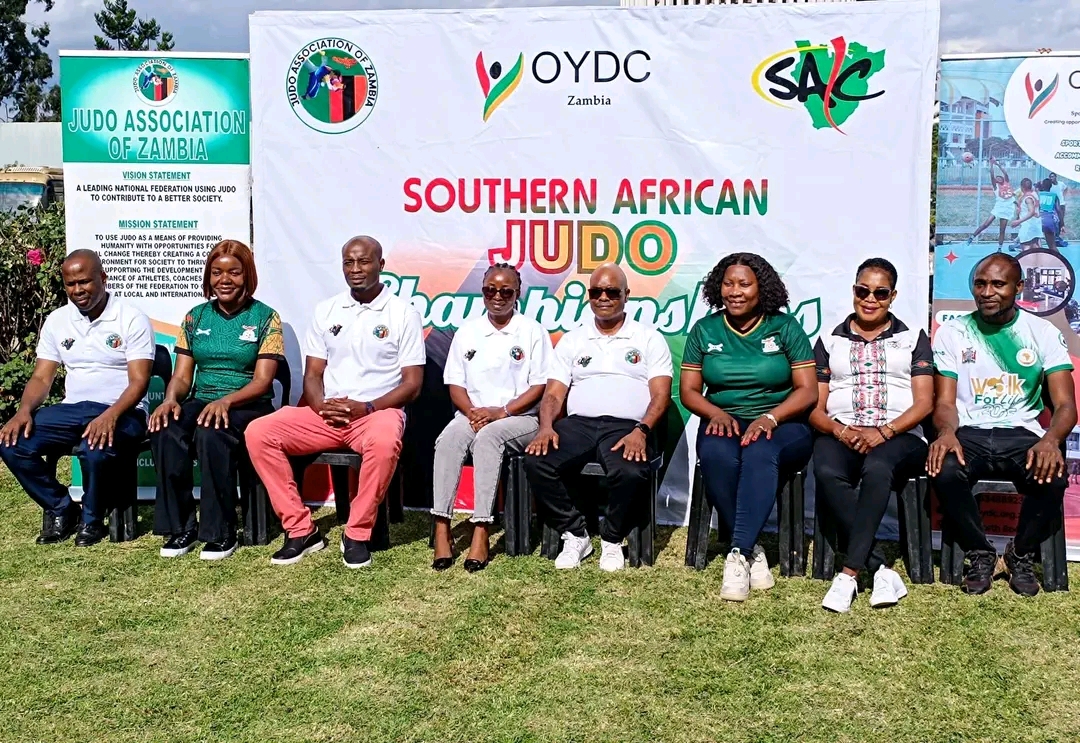
ZAMBIA is set to host the Southern African Judo Championships for the very first time, bringing together cadet and senior athletes from across 10 countries at the OYDC in Lusaka from April 4–5, 2026.
The regional competition, launched yesterday, will see cadets battle on the mats on April 4 while seniors take over on April 5, with the event serving as a qualifier for the Africa Union Sports Council Region 5 Youth Games in Mozambique.
The championships will see teams from across Southern Africa, including South Africa, Zimbabwe, Botswana, Namibia, Mozambique, Angola, Malawi, Lesotho, Eswatini, and Zambia as hosts.
Speaking at the launch, Southern Africa Judo Confederation General Secretary Mabvuto Ng’uni said the championships carry huge significance for both cadets and seniors.
“For cadets, this tournament is a qualifier for the Region 5 Youth Games, while for seniors it is a chance to gain international exposure and prepare for upcoming competitions,” Ng’uni said.
Ng’uni also said that each country is allowed to bring two athletes per weight category, with eight categories per gender.
“That means 32 cadets per country, and if all 10 countries participate, we expect about 500 athletes in total, with cadets alone accounting for around 320,” Ng’uni said.
Ng’uni also said that the competition will follow international standards.
“Where there are six or more athletes in a category, two bronze medals will be awarded under the double repechage system. Where there are five or fewer, only one bronze is given. In all cases, athletes will compete for gold, silver and bronze,” said Ng’uni.
He further said Zambia is ready to host, but financial support from government remains crucial.
“We have worked with OYDC, the Sports Council and the judo family to put logistics in place. Hosting is a huge task and we have requested government support to meet the costs,” Ng’uni said.
Ng’uni also said that preparations are on track with deadlines looming.
“The deadline for team bookings and data submission is March 15, and we are coordinating transport, accommodation and immigration clearance to ensure smooth arrivals for all delegations,” Ng’uni said.
Beyond sport, Ng’uni highlighted the wider impact of the event.
“Teams will book accommodation, pay for meals and spend locally. This money will remain in Zambia. Our athletes, many of whom have never competed internationally, will also get the chance to showcase their talent against regional opponents,” said Ng’uni.
By Daniel Banda
Kalemba March 14, 2026