

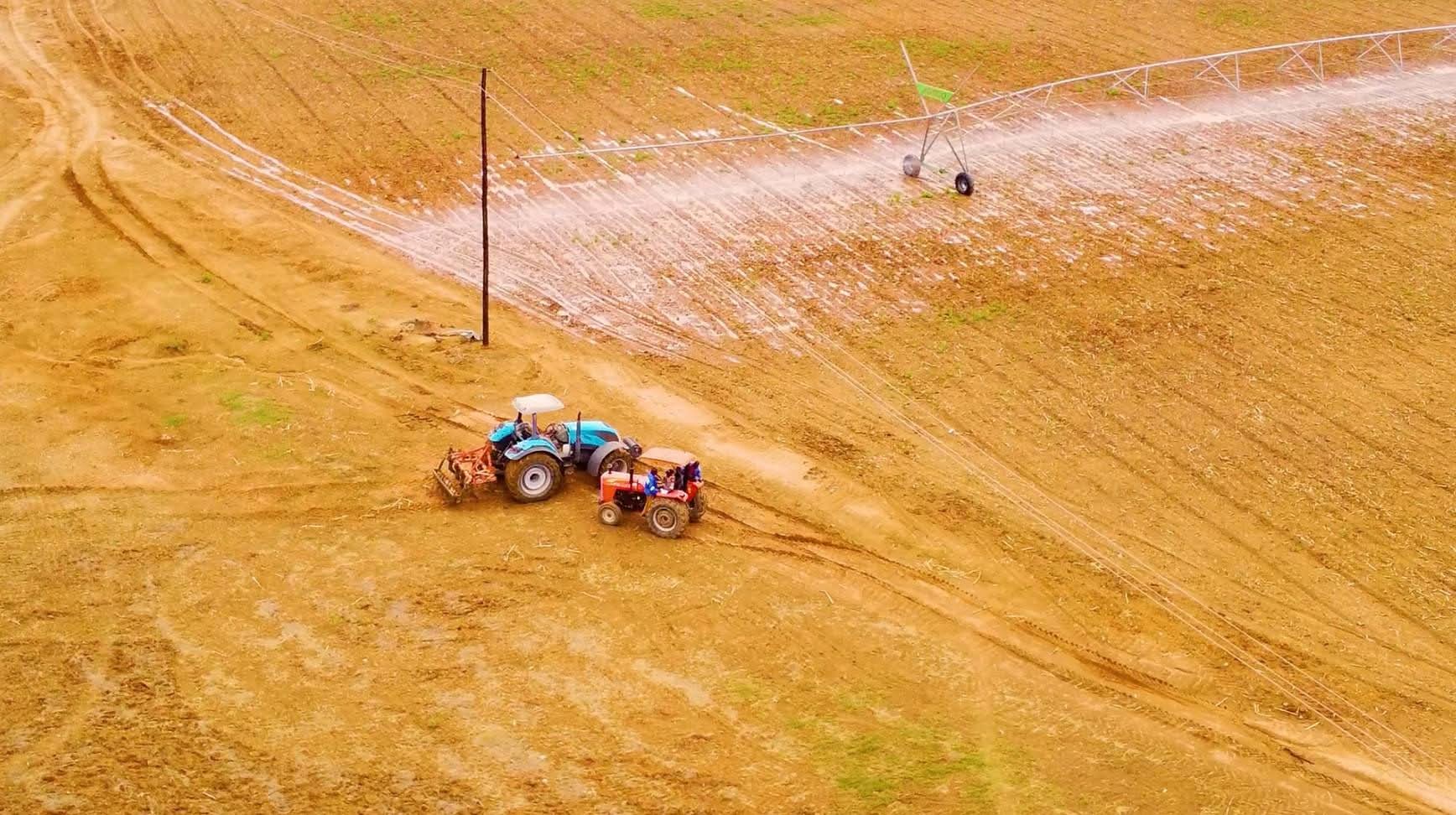
ZAMBIAN farmers and agricultural small and medium-sized enterprises (SMEs) are reporting increased production, improved resilience to climate shocks and expanded market opportunities after accessing financing through the Zambia Agriculture Value Chain Facility (ZAVCF).
The facility, supported by the European Investment Bank (EIB Global) and the European Union, was introduced to address one of the biggest challenges in Zambia’s agriculture sector, which is limited access to affordable and long-term financing.
For many farmers and agribusinesses, lack of financial support has hindered their expansion, investment in irrigation systems and adoption of modern technologies, despite agriculture employing between 50 and 70 percent of the country’s population.
At Matuka Farm in Mkushi, the farm manager Joyce Nambeye said funding through the ZAVCF allowed the business to expand operations, set up an irrigation system and remain productive in the face of challenges like the worst drought in living memory during the 2023/2024 farming season.
The drought also led to the disruption in powered supply since Zambia is heavily dependent on hydropower, which meant a lot of loadshedding.
Nambeye said weather changes and power shortages threatened the farm’s survival until it accessed financing through Zanaco, one of the local banks partnering in the facility.
“We saw an advert on social media and approached Zanaco which explained the programme to us. After getting the loan, we were able to invest in an irrigation system and we are now making un-interrupted progress,” she said.
In Kabwe, Amadeus International managing director Rajendra Patel said access to financing was previously a challenge but through ZAVCF and Zanaco, the company was able to install additional irrigation infrastructure and expand cultivated land.
“The funding helped us introduce more irrigation, expand hectares and even do double cropping on the same land. It also protects us from droughts and improves our revenues,” Patel said.
Through the ZAVCF partnership with local Zambian banks, commercial farms have also benefited from the facility’s provision of foreign-currency loans, which are suited to export-based operations.
Galaunia Farm managing director Nigel Lacey said getting loans in US dollars aligns better with farms that sell their products in international markets or need to import inputs or equipment as they can pay in foreign currency.
“Borrowing in dollars at a viable interest rate allows us to remain profitable and continue supporting our workers and the surrounding community,” he said.
The Zambia Agriculture Value Chain Facility was launched in 2021 as part of the EU’s Global Gateway target to support sustainable development and economic transformation through targeted investments.
Through the lending framework, the European Investment Bank channels capital to local banks, including Zanaco, First Capital Bank Zambia and the Zambia Industrial Commercial Bank, who then lend to farmers and agribusinesses that understand local market conditions.
Since the programme’s launch, multiple credit lines have been mobilised, including €15 million extended to Zanaco in 2021, €10 million to First Capital Bank in 2023 and a €15 million facility signed with Zambia Industrial Commercial Bank in 2025 to support private sector agricultural investment.
The Zanaco credit line is already fully utilised with strong tangible impact being witnessed on the ground. This also shows the big need for affordable financing in the market.
The ZAVCF combines long-term financing, risk-sharing guarantees backed by the European Union and technical assistance to strengthen both banks and borrowers.
By sharing credit risk with local banks, the programme acts as a safety net, enabling financial institutions to extend loans to farmers who previously lacked sufficient collateral or smaller sized companies that were previously seen as too risky to support.
Beyond financing, head of the European Investment Bank’s Hub for Southern Africa, Jim Hodges said the facility provides training and technical assistance to farmers to improve productivity, environmental sustainability and business management.
“We provide financing and technical assistance to private sector development projects in Zambia, which support the national key priorities as well as aligning to the EU objectives,” said Hodges.
Meanwhile, the European Union ambassador to Zambia and COMESA Karolina Stasiak said the EU will continue supporting Zambia’s ambition to transform the agriculture sector into a thriving sector that creates jobs and boosts growth for the country.
“Our actions focus primarily on supporting small-scale farmers and fishermen to modernise their farming practices and to connect them with businesses.”
“This includes promoting new investments in promising agricultural value chains. This includes also facilitating access to finance, to capacity building, and to inputs,” stated Stasiak.
By Moses Makwaya
Kalemba April 7, 2026


